Guides
Vertical blinds are fabric or PVC vanes that hang from a track, tilt to set the light and privacy, and slide aside to clear the glass. They suit sliding doors and wide windows. This buying guide covers how we help you choose, from the free measure to install day.
We've measured and fitted window furnishings across the Central West since 1977. A big slider out to the deck or alfresco is where a vertical most often makes sense, and plenty of homes have one. Here's what we look at before we recommend one, and the times we'd steer you to something else.
A sliding door gets used dozens of times a day. Anything that has to be lifted, tied back or pushed out of the way gets annoying fast. With a vertical, the vanes sit stacked beside the frame, you walk through, and the fixed pane next to you can still be tilted for privacy.
That's why we specify them for doors people actually use. On a 20-unit housing build in Griffith, we put 32 vertical blinds over the sliding doors and blockout roller blinds on every window. Rollers where you want a clean, dark window. Verticals where people come and go.
They also handle glass that other blinds struggle with: wide openings, full-height panes in a renovation, and raked windows under a sloping ceiling, where we can set up a sloped heading so the top follows the angle.
Part of a good measure is being honest about where a vertical falls short. These are the three conversations we have most.
Even with blockout vanes, light gets between them and around the sides. If you're a shift worker or the morning sun hits your pillow, we'll usually suggest a blockout roller blind or lined curtains instead.
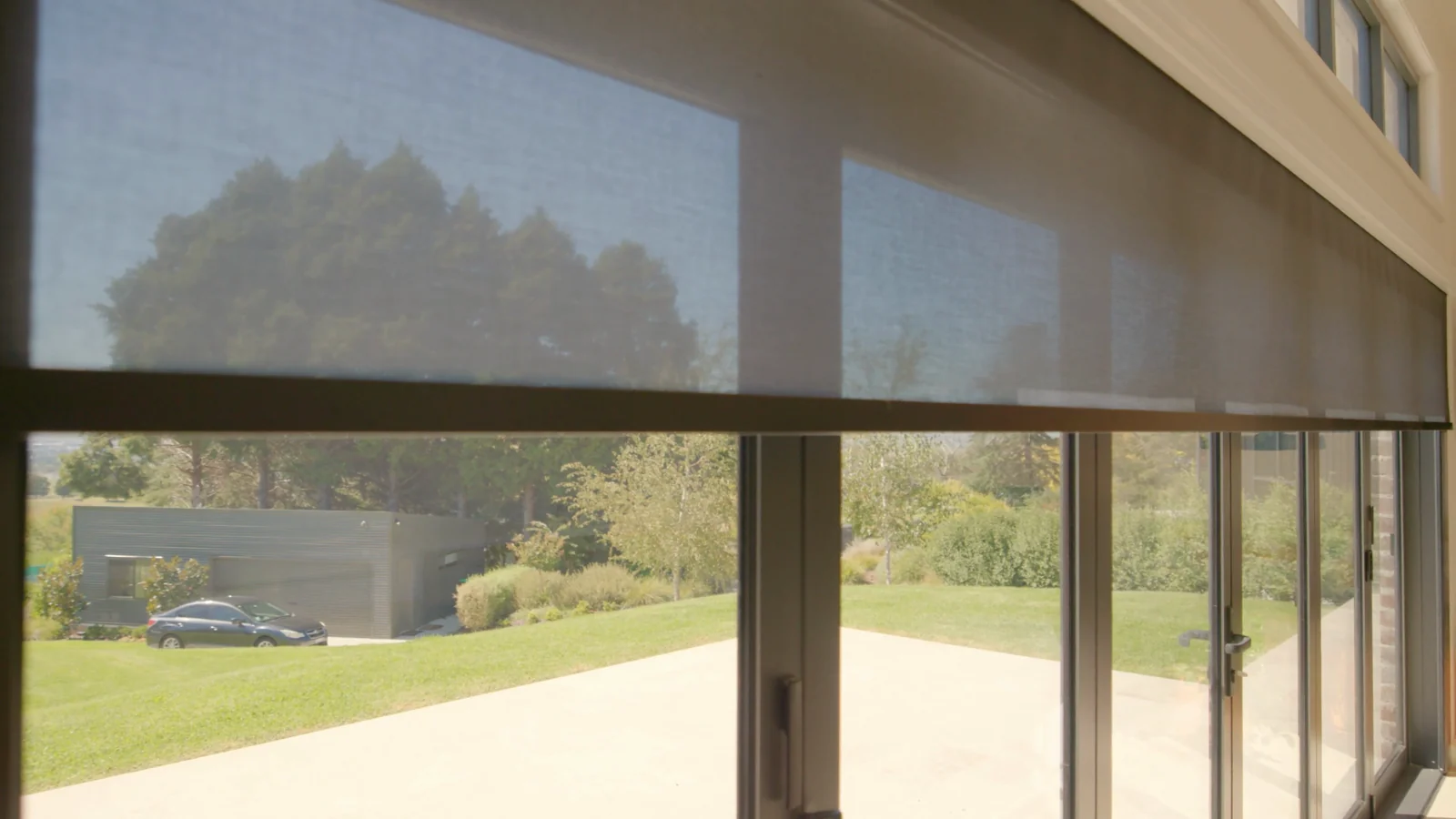
Out on acreage, or anywhere the outlook is the point of the room, we often go with sunscreen roller blinds. On one rural property at Mount Panorama we ran sunscreen rollers across the main living glass. They cut the glare but you still see the paddocks and the ranges.
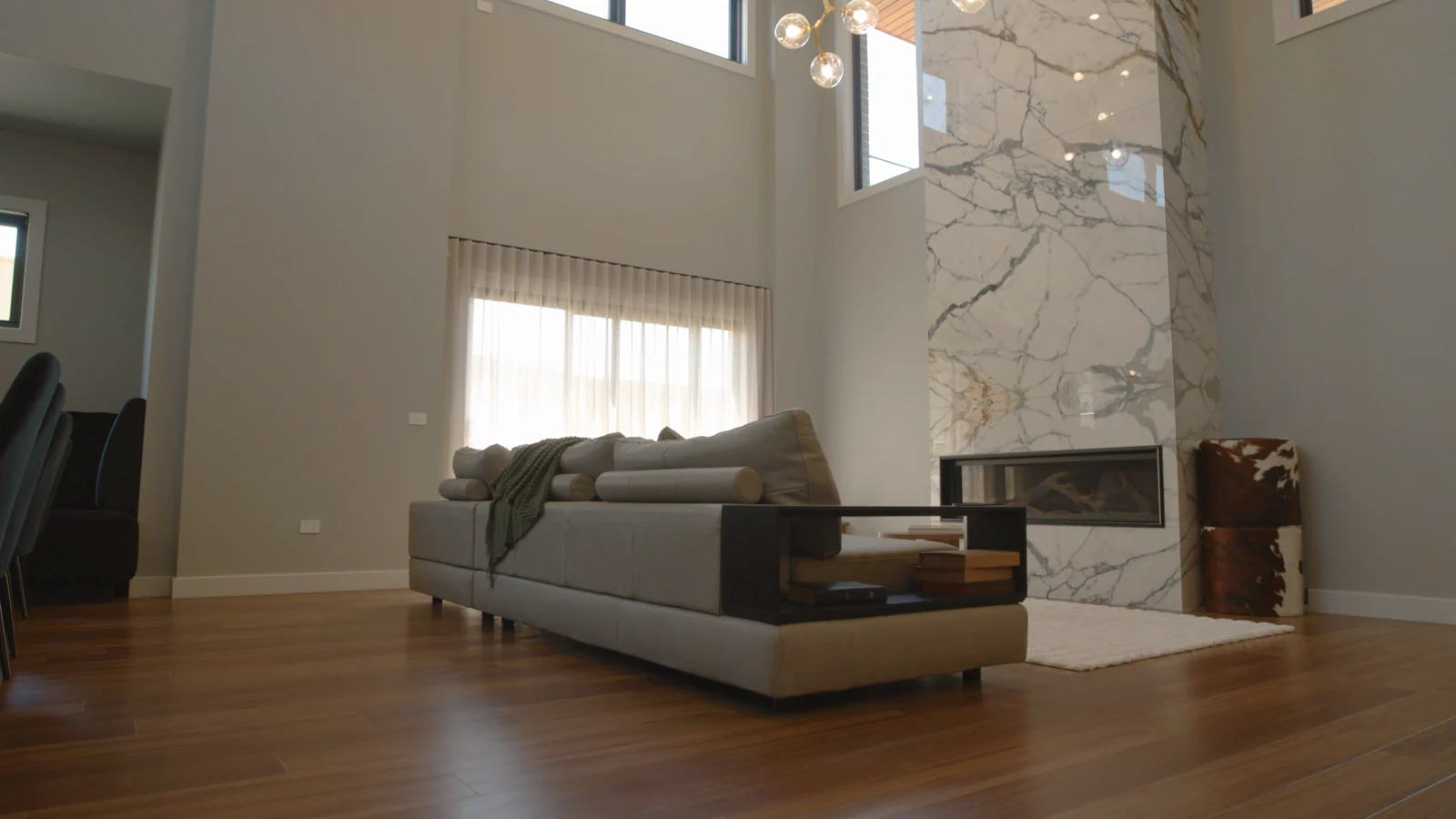
Some rooms want softness more than slats. In a two-storey Bathurst home with a double-height living room, we hung sheer curtains on the tall windows, hand-sewn in our Bathurst workroom, and kept blockout rollers for the lounge and bedrooms. If you like how a vertical moves but want fabric you can see through, ask us about vertical sheers: soft fabric on a single track that you can walk through. For a flatter, more modern look on a wide door, panel glide blinds are worth a look too.
Fabric vanes are what most homes choose. They feel closer to a curtain and come in blockout, light-filtering, translucent and screen fabrics, so you can decide how much daylight gets through when the vanes are closed. If you're torn between those, our guide to blockout, light-filtering and sunscreen fabric explains the difference.
PVC vanes handle moisture and wipe clean with a damp cloth. We suggest them for laundries, bathrooms and busy back doors where muddy paws and wet towels are part of life.
We bring the samples to your home. A vane looks different with a west-facing slider behind it at four in the afternoon than it does on a showroom table, so we like you to see it in your own light.
Vanes come in two common widths. The 127mm vane is broader, so a blind needs fewer of them, and it suits big sliders and long runs of glass. The 89mm vane gives a finer line that can sit better on a smaller window. If you're replacing old verticals, we'll often match what's there so the room doesn't look different from outside.
This is the part an online order can't do for you. When we measure, we're looking at how the room works as well as the size of the glass.
Each blind is custom-made to order to those measurements, then our own team comes back to install it. The person who measures your windows is the one who installs them.
Verticals are easy to keep. Dust the vanes now and then, wipe PVC with a damp cloth, and if one vane gets damaged it can usually be replaced on its own rather than the whole blind. Expect them to swing and tap a little when the door is open on a windy afternoon. Every blind we install comes with our 2-year warranty against faulty manufacture or installation.
We come to you, evenings and weekends included, across the Central West and Sydney's eastern suburbs and lower north shore. We'll measure every opening, bring samples, and tell you honestly whether a vertical is the right call. Book a free measure and quote, or drop into our Bathurst showroom and see the vanes in person. You can also read more about our vertical blinds.
Yes. They stack beside the frame so you can walk straight through, and the vanes still tilt for privacy on the fixed glass. That's the job they were designed for.
No. Blockout vanes stop light through the fabric, but some still comes in between the vanes and at the sides. For a dark bedroom we'd suggest a blockout roller blind or lined curtains.
Yes. A sloped heading lets the track follow the angle of the window, so the vanes still hang straight. We'll measure the angle on site.
Usually, yes. A damaged vane can normally be swapped on its own, so you don't need a whole new blind.
Yes. We measure and install across the Central West, including Orange, Dubbo, Mudgee and Lithgow, and in Sydney's eastern suburbs and lower north shore.
Custom-made and installed by our own team since 1977. Book a free in-home measure and quote.
Book a Free Measure & Quote