Guides
If you've been looking at outdoor blinds for a patio or alfresco area, you've probably come across the name Zipscreen. It gets used loosely, so here's what it actually is and where it works.
A Zipscreen is an outdoor blind where the fabric edge runs inside a track down each side. A zip is welded to the edge of the fabric, and that zip stays locked in the side channel as the blind goes up and down. That's the whole idea. The fabric can't blow out of the track.
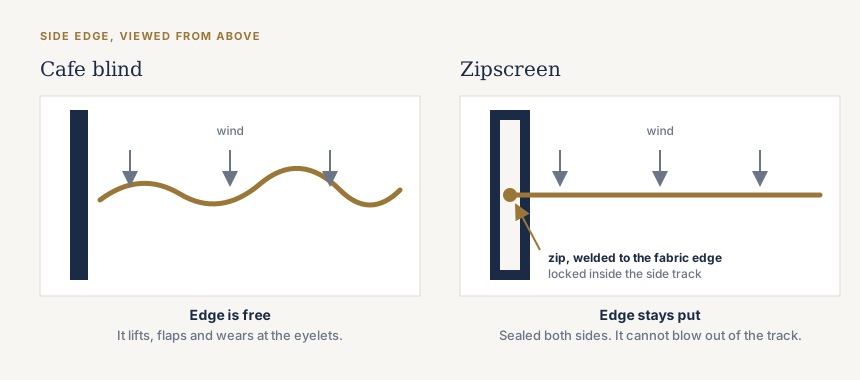
Ordinary outdoor blinds are held by ropes, straps or clips at the bottom. In still weather they're fine. In wind, the edges lift and the blind moves. A tracked blind stays put, which is why you see them on exposed patios and second-storey balconies.
Wind is the reason most people here end up with a tracked system. Bathurst, Orange and the tablelands get sustained westerlies through spring, and an alfresco area on the western side of a house cops them. A rope-and-pulley cafe blind on that wall will flap, wear at the eyelets and eventually tear at the edge. The same opening with a tracked blind stays sealed.
The second reason is that the season here is short and sharp. You want the space usable on a cold September evening and a 35-degree January afternoon. A blind that seals down both sides holds warmth in far better than one with open edges. That gap down the side is where it's lost.
Choose a tracked blind when:
A cafe blind is fine when:
There's no prize for over-speccing a sheltered courtyard. But on an exposed western wall, an untracked blind is a false economy. You'll replace it.
This is the choice that actually changes how the space feels.
Sunscreen mesh blocks glare and most of the heat while you can still see out. The view stays. It won't stop driving rain.
Clear PVC gives you a sealed room. Rain, wind and cold all stop. It's the choice if you want the alfresco usable year-round. But it's a window, so it shows marks, and in full sun a fully enclosed PVC space gets warm.
Plenty of Central West homes end up with both: mesh on the sunny side, PVC on the weather side. There's no rule against mixing them across one area.
We won't quote a price without seeing the opening, because the same-looking patio can vary enormously. What moves it:
That last one is the one people don't expect, and it's the reason a proper measure matters more than a phone quote.
Not much. Keep the side tracks clear. Leaves and grit in the channel are what causes problems, not the fabric. A hose-out once or twice a year is enough. Clear PVC wants a soft cloth and plain water. Anything abrasive or solvent-based will haze it, permanently.
Our own team measures, and our own team installs. Zipscreen and outdoor blinds are custom-made to order to your openings. Nothing comes off a shelf and gets trimmed to fit. We work across Bathurst, Orange, Dubbo, Mudgee, Lithgow and the wider Central West from our Bathurst base.
What is a Zipscreen blind?
An outdoor blind with a zip welded to each fabric edge that runs inside a side track, so the fabric stays sealed and can't blow out in wind. It's the tracked alternative to a rope-and-pulley cafe blind.
Are Zipscreen blinds good in wind?
That's their main advantage. Because the edges are locked in a channel, the blind stays put on exposed patios and balconies where a cafe blind would flap and wear.
Mesh or PVC for a Zipscreen?
Mesh keeps the view and blocks glare and most heat but not rain. Clear PVC seals the space against rain, wind and cold but shows marks and warms up in full sun. Many homes use mesh on the sunny side and PVC on the weather side.
Can a Zipscreen be motorised?
Yes. Tracked systems handle motors properly, and motorisation is worth it on anything you open daily or can't easily reach.
Quicksew has been making and installing window furnishings in Bathurst since 1977. Book a free measure and quote and we'll bring the fabrics to you. Call (02) 6332 2144.
Custom-made and installed by our own team since 1977. Book a free in-home measure and quote.
Book a Free Measure & Quote.svg)