Guides
The short answer: choose curtains by deciding what the room needs from the window by day and by night, then the heading, the fabric and lining, how full the curtain should be, and the track or rod it hangs from. We work through all of it with you at a free measure and quote, and this curtain buying guide follows the same order.
We've measured, sewn and hung curtains across Bathurst and the Central West since 1977, and most of this guide is the conversation we have standing at your window. Every one of our custom curtains is cut and sewn by hand in our Bathurst workroom, and the same team that measures comes back to install it. Here's what we look at, in the order we look at it.
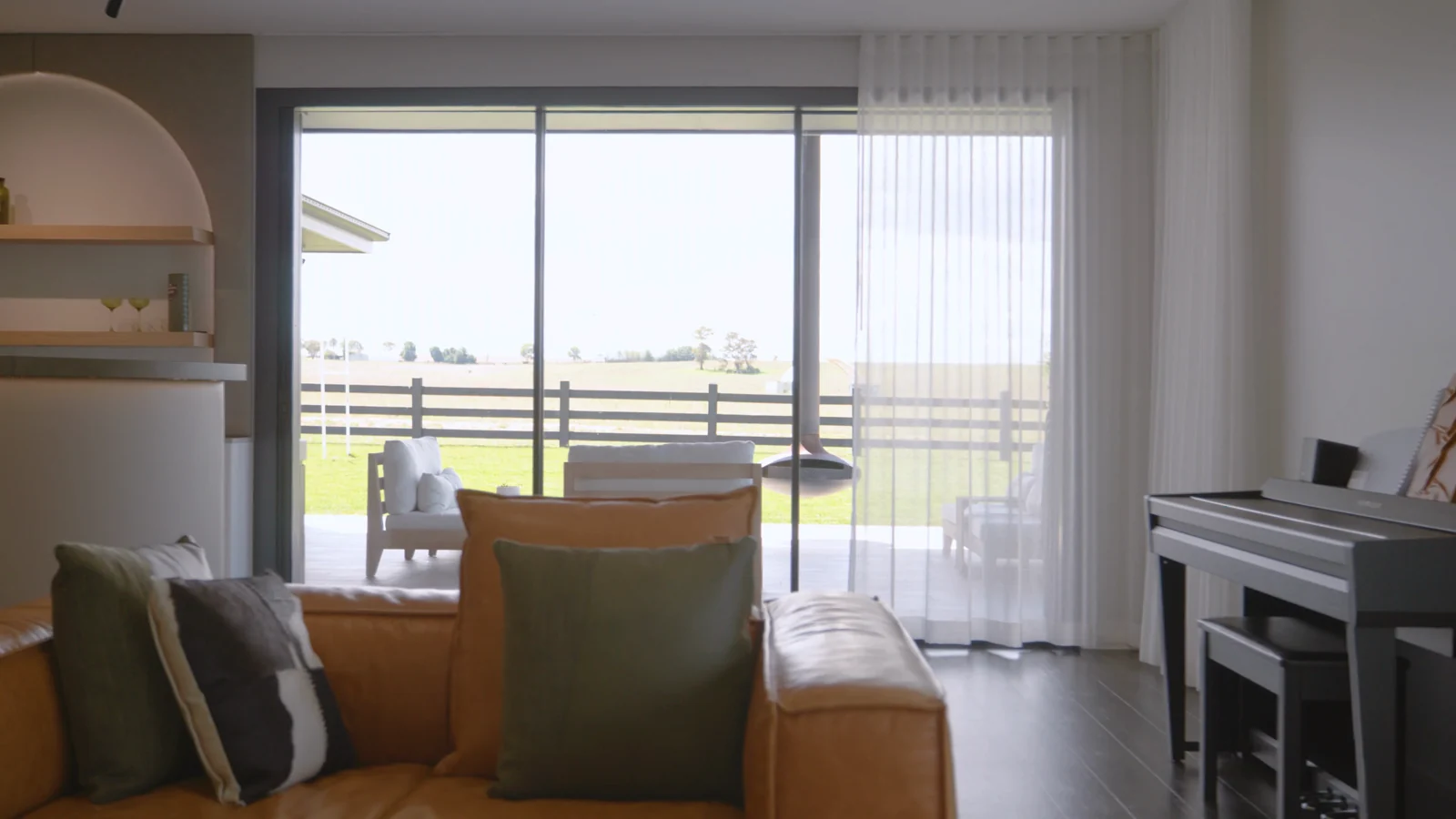
Before fabric or style, we ask how you use the room. A bedroom facing the street needs dark and privacy at night. A lounge looking over the paddocks needs the light softened without losing the view.
That usually lands on one of three answers: a sheer for soft daytime light, a blockout for dark, or both on a double track. We've covered the first two in blockout vs sheer curtains, and the layered setup in double curtains, sheer and blockout.
Curtains aren't always the answer, and we'll say so. Across a sliding door you walk through all day, vertical sheers can suit better: the fabric folds turn with a wand, there are no weights or chains, and you step straight through them. Where you want the precise light control of a blind and the softness of fabric, we often pair a sunscreen roller blind behind the curtains.
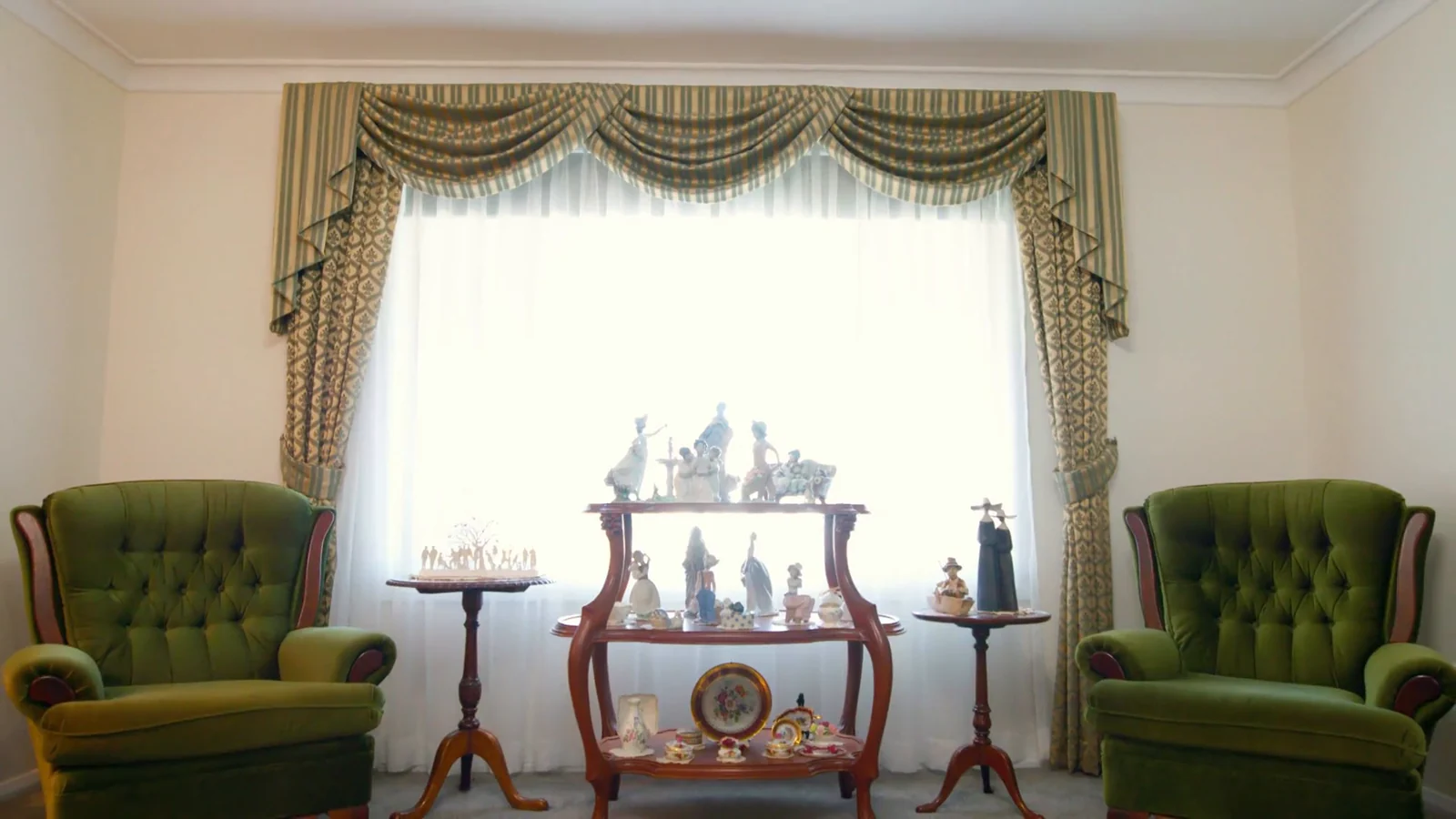
The heading is how the top of the curtain is made, and it sets the whole character of the window. We make S-fold (also called wave), pinch pleat, pencil pleat and eyelet, with box pleat and tab top on request. Here's what we usually suggest, from what we see in homes around the region:
The heading also decides the hardware. Eyelet curtains need a rod. S-fold needs a track with wave carriers, which hold each fold at an even spacing. That's one reason we specify the track and the curtain together, before any fabric is cut.
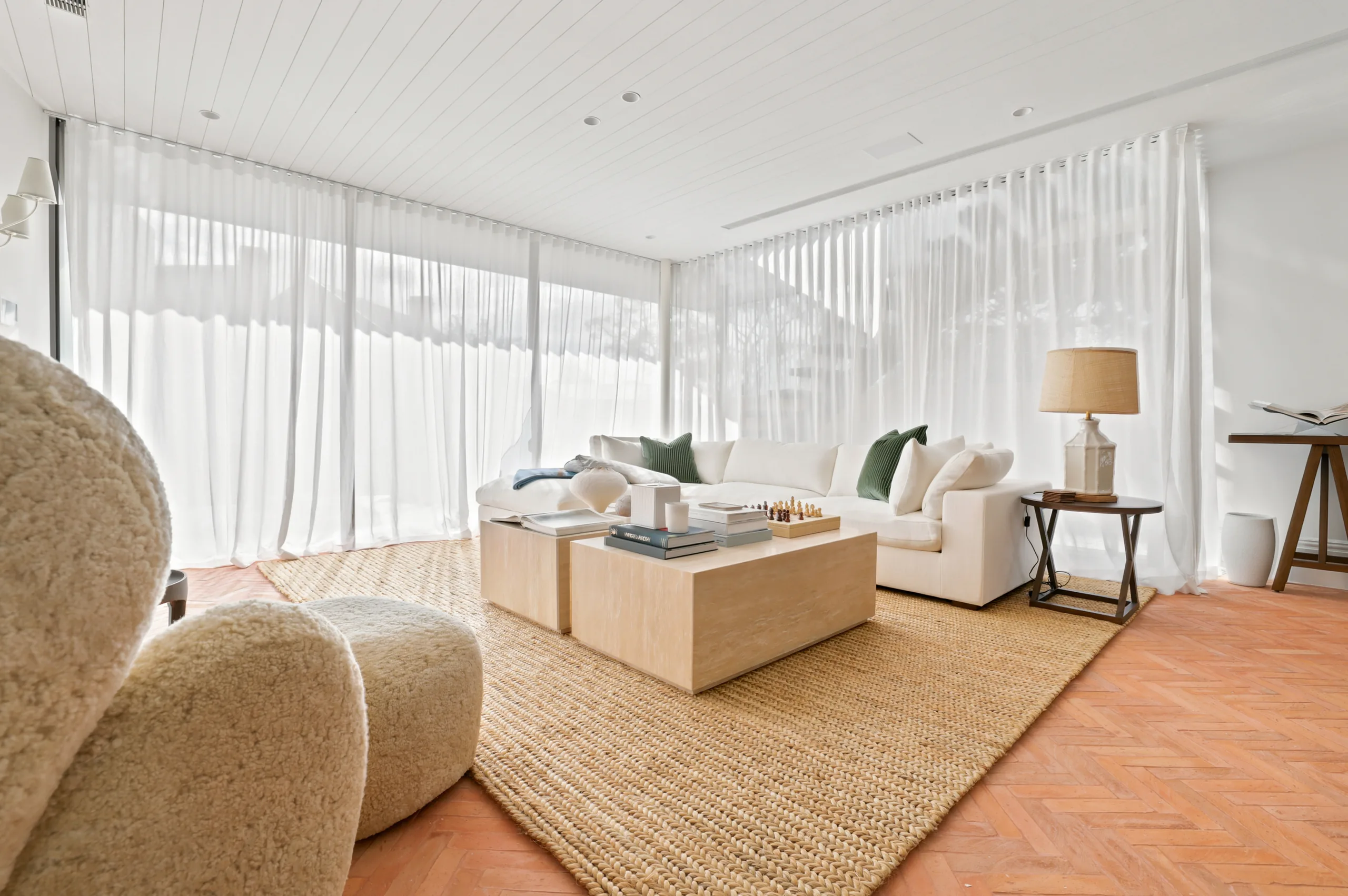
Two joined terraces in Paddington needed two headings in the one house. Euro pleat curtains layered over sheers dress the original front rooms, and S-Wave sheers run on ceiling track around every wall of glass in the new extension at the back. The Paddington terrace project shows how the two sit together.
Fabric is the part you live with every day, so we bring samples to the measure and hold them up against your own glass. Our post on how to choose the right fabric goes through light levels, rooms and the sun in detail.
For curtains, the lining matters nearly as much as the face fabric. We make curtains unlined, lined, or with an attached lining. A lining gives the curtain more body, so it hangs with more weight, and it changes how much light comes through. A sheer is usually left unlined. A blockout lining behind a decorative fabric is how a patterned or designer curtain still darkens a bedroom.
West-facing windows are hard on fabric out here, and a cheap fabric in full afternoon sun can fade within a few seasons. On those windows we'll steer you to a fabric that holds its colour. If you're mostly thinking about cold winter nights, we've written about that separately in curtains for a Central West winter.
Fullness is how much extra fabric goes across the track compared with its length. Too little and a closed curtain looks flat and stretched. More fullness gives deeper, softer folds, and uses more fabric.
On wave curtains we specify fullness as a percentage. The Forest wave carriers we fit come in 60, 80, 100 and 120 percent fullness, and we pick one to suit the weight of the fabric and the look you want. For a Bathurst lounge in a Designers Guild fabric, we made the curtains at 80 percent and layered them over S-Wave sheers on dual tracks.
Two practical things follow from fullness. A wave curtain needs room off the wall or ceiling return to form its folds: 107.5 mm or 157.5 mm, depending on the wave depth. And all that fabric has to go somewhere when the curtain is open, which brings us to the stack.
The stack is the bundle of fabric that gathers beside the window once a curtain is drawn back. If there's no wall beside the window for it, the open curtain sits over the glass and you lose light and view. Wave curtains stack back in less width than pleated ones, but every curtain needs somewhere to go.
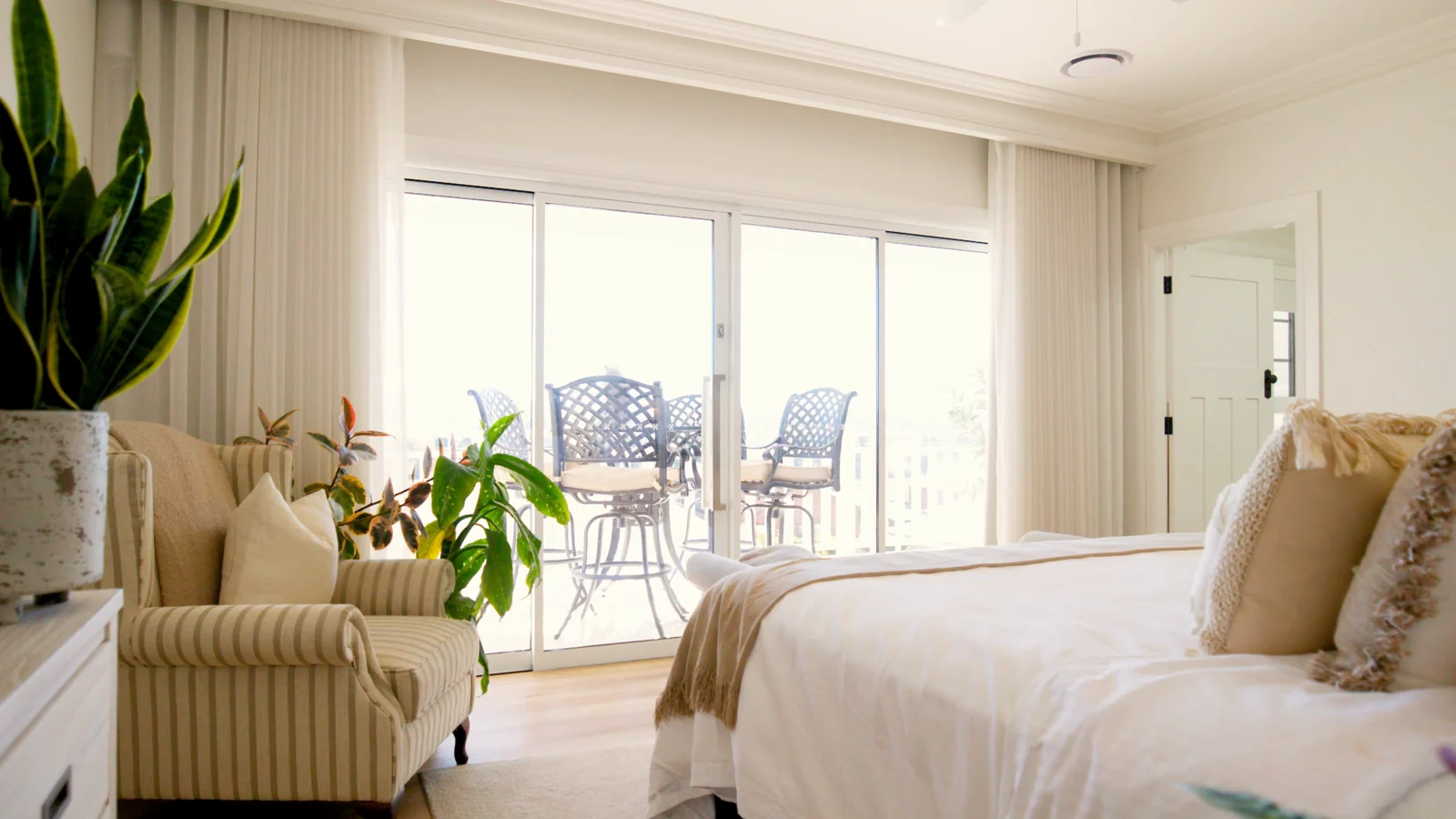
In a hillside home in Bathurst, we set the stack back off the glass at the sliding doors, so the sheers clear the doors completely and the outlook over the town stays open. We check that at the measure, window by window.
For most homes we specify an aluminium track fixed to the ceiling. The curtain hangs from ceiling height, which makes the room feel taller, the track disappears when the curtains are open, and it handles wave headings, double sheer-and-blockout sets and motors. A decorative rod is the pick when the rod is part of the design, with eyelet or ring-top curtains.
What we find on site changes the plan more than people expect:
A hand-drawn track is the simplest and suits most rooms. A corded track lets you draw a heavy curtain without handling the fabric. For tall windows, wide runs, or curtains you'd like on a remote or a wall switch, we fit Somfy curtain motors, either mains-powered or battery-run, so a room without a power point near the window can still be motorised. In the Paddington main bedroom, the blockout-lined curtains run on a motorised rod.
If the curtain is going into a child's bedroom, mention it at the measure and we'll talk through wand, cordless and motorised options.
Our work is covered by our 2-year warranty against faulty manufacture or installation.
S-fold suits modern rooms and large glass, and folds back compactly. Pinch pleat has a more structured, traditional look and suits older homes and formal rooms. At the measure we'll bring samples and talk you through both for your rooms.
Sheers usually don't. Most other curtains look and hang better lined, and a blockout lining is what lets a decorative fabric darken a bedroom. We make curtains unlined, lined or with an attached lining.
Yes. We supply the track or rod with your curtains and install the complete set, including manual, corded and motorised tracks and wave-compatible systems.
Yes. We bend the track to the shape of the bay so the curtain runs around it smoothly, and we match the track to the weight of the curtain it carries.
Yes. We measure and install across the Central West, including Orange, Dubbo, Mudgee and Lithgow, and in Sydney's eastern suburbs and lower north shore.
Ready to start? Book a free measure and quote, or visit our showroom and workroom at 16 Bradwardine Road, Bathurst. You can also call us on (02) 6332 2144.
Custom-made and installed by our own team since 1977. Book a free in-home measure and quote.
Book a Free Measure & Quote