Guides
The right outdoor blinds are matched to the spot they cover: mesh for shade with a view, clear PVC for shelter from rain and wind, canvas for privacy, and side guides strong enough for how exposed that spot is.
That's the short answer. The longer one depends on your deck, your verandah or the covered area off your kitchen, and on which way it faces. Quicksew is a family-owned Bathurst business, and we've been measuring and installing window furnishings since 1977. When we come out to look at an outdoor area, we work through four things in order: how the blind is held at the sides, the fabric, how you'll run it, and what the site will let us fix to. This buying guide follows the same order.
If you've already settled on a zip-track blind, our Zipscreen explainer covers how the track works. This guide is the step before that, across the whole outdoor blinds range.
Outdoor blinds differ most in how their sides are held, and that decides how they behave once the weather turns. We fit four kinds.
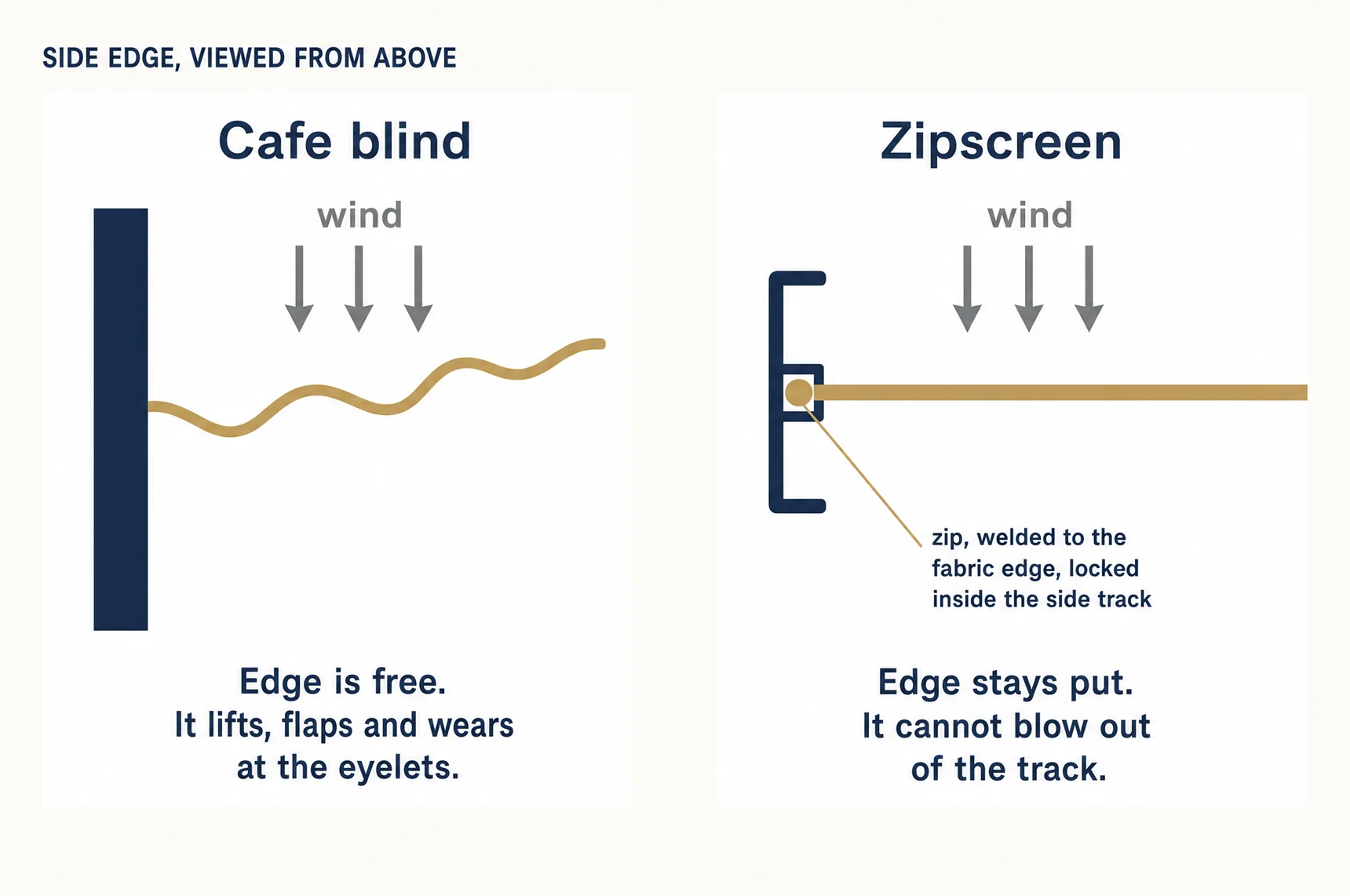
A sheltered courtyard tucked between two walls rarely needs more than a straight drop. A wide, open deck on the windy side of the house is a different job.
The fabric decides how the space feels once the blinds are down. Here's how the three main types compare.
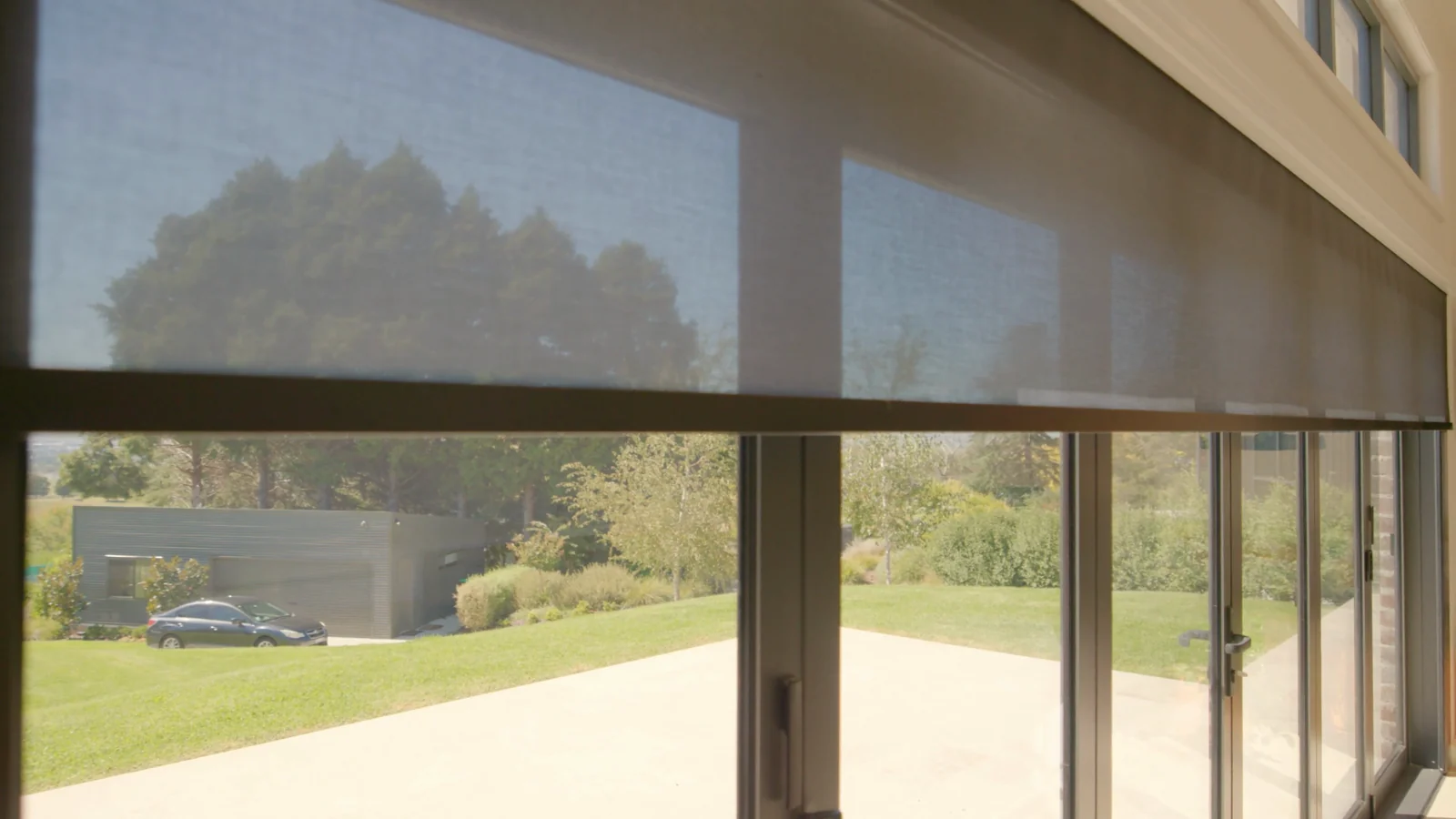
Openness works the same way inside a house as it does outside. On a rural home at Mount Panorama, we chose a sunscreen openness that took the afternoon glare off the living room without losing the outlook over the lawn and trees.
Don't feel you have to use one fabric for the whole area. Ask what each side needs on its own. The answer often changes from one wall to the next.
Two questions settle this one: how often you'll open the blind, and how easily you can reach it.
Our rule of thumb: if it opens every day, if it's wide, or if it's out of easy reach, motorise it. If it goes down in January and comes up again in March, a crank will do the job. Our motorised blinds cost guide explains the power options and what moves the price.
Around Bathurst, Orange and Dubbo, summer afternoons bring hard western sun, and winter evenings get cold. A west-facing deck needs the most sun control. The side that takes the weather needs PVC or canvas if you want to use the space in July.
Wind is the thing we look at hardest. On an exposed site we'll steer you towards a zip-track blind, because the fabric can't lift out of its channels the way an unguided blind's edges can. We don't quote one wind rating for the whole range, since each system carries its own, and we'll tell you what applies to the one we recommend.
Whatever you choose, roll outdoor blinds up in a storm or very strong wind. A wind sensor on a motorised blind will retract it when gusts pick up, but treat it as a backup, not a reason to leave the blind down when a front comes through.
In Sydney, close to the beach, salt air is the other thing to plan for. There we specify coastal-approved aluminium and stainless-steel components for coastal sites.
These are the questions we work through on site, and they're worth thinking about before we arrive.
We bring fabric samples, so you can hold the mesh up against your own view before you choose. Your blinds are then custom-made to order to the sizes we take, and our own team comes back to install them. Every job carries our 2-year warranty against faulty manufacture or installation.
A zip-track blind, because both edges are held in channels from top to bottom. Somewhere sheltered, a wire guide or straight drop usually does the job. Either way, roll them up in a storm.
Through mesh and clear PVC, yes. Mesh keeps the view while it cuts the glare, and PVC is fully see-through. Canvas is solid, which is the point when you want privacy.
It's the percentage of a mesh that's open weave. A 1% mesh is tighter, for more privacy and UV control. A 5% mesh is more open, so more of the view comes through.
For the Dayscreen mesh we use on zip-track blinds, the maker's advice is to brush off dust, wipe it with a damp sponge and dry it with a clean cloth. Skip harsh or solvent cleaners, and never roll the blind up while the fabric is still damp.
Yes. We measure and install across the Central West and in Sydney's Eastern Suburbs and Lower North Shore.
Ready to work out what suits your outdoor area? Book a free measure and quote and we'll look at the spot with you and bring the samples, or drop into our Bathurst showroom. Quicksew, family-owned since 1977.
Custom-made and installed by our own team since 1977. Book a free in-home measure and quote.
Book a Free Measure & Quote