Guides
Pick a venetian's slat by the room and its width by the window. Aluminium or a timber-look slat for kitchens, bathrooms and laundries, real timber for living rooms, bedrooms and studies. Then check two things: reveal depth, and how much glass the raised blind covers.
This venetian blinds buying guide is written from our side of the tape measure. We've measured and installed window furnishings across the Central West and Sydney since 1977, and most of what makes a venetian work shows up in the room, not the brochure. How deep is the reveal? Which way does the afternoon sun come in? How tall is the glass, and do you want to see out of the top of it?
Venetians come in three families of slat, and each one has a room it suits.
Slat width is mostly about scale. A 25 mm slat sits neatly in a small window or a narrow reveal, and it's a good fit for a bathroom or laundry. The 50 mm slat is what most people picture when they hear the word venetian, and it suits most living-room and bedroom windows. A 63 mm timber-look slat is the widest of the three: fewer slats across the window, and more of the outlook between them when they're tilted.
If you can't decide, we can hold samples of two widths up in the actual window at the measure. Seeing them against your own frame settles it faster than any photo.
This is the question people rarely ask until the blind is up. A venetian doesn't disappear when you raise it. The slats stack at the top of the window, and on a tall drop that stack is deeper than most people expect.
The makers publish the numbers. Going by Vertilux's data sheets, a 25 mm aluminium venetian stacks to about 45 mm plus 3.4% of the drop. A 50 mm aluminium (Wideline) stacks to about 68 mm plus 5% of the drop, and a 50 mm Ultrawood timber-look blind to about 57 mm plus 9%. On a 2,000 mm drop, that's roughly 113 mm, 168 mm and 237 mm of slats sitting across the top of the glass.
On a window with a view you care about, that's when we talk about mounting the blind higher, on the wall above the frame, so the stack sits over the wall instead of the glass. Sometimes it's when we suggest a different blind altogether.
A recess fit (we also call it a reveal fit) tucks the blind inside the window frame. It's the tidy, built-in look, and it needs depth. Vertilux allows roughly 60 mm for a 25 mm system and roughly 80 mm for a 50 mm one. Out-of-square and deep-reveal windows are common in older homes around Bathurst, which is one reason every venetian is made to the exact opening.
A face fit mounts the blind on the wall or architrave over the opening. It gets around a shallow reveal, it covers more of the light gap down the sides, and it lets you lift the stack clear of the glass. In a bedroom, that light gap down the sides is often what decides it.
Either way, a few millimetres decide whether the slats tilt freely or rub on the reveal, which is why we measure every window ourselves. Our guide on how to measure for blinds walks through what we check.
Venetians suit standard windows. On a wide wall of glass or a run of sliders, one big venetian gets heavy to lift, and the stack gets deep. The makers size them accordingly: Vertilux rates an Ultrawood timber-look blind to 3 m² if it's raised often, against 12.5 m² for a 50 mm aluminium Wideline.
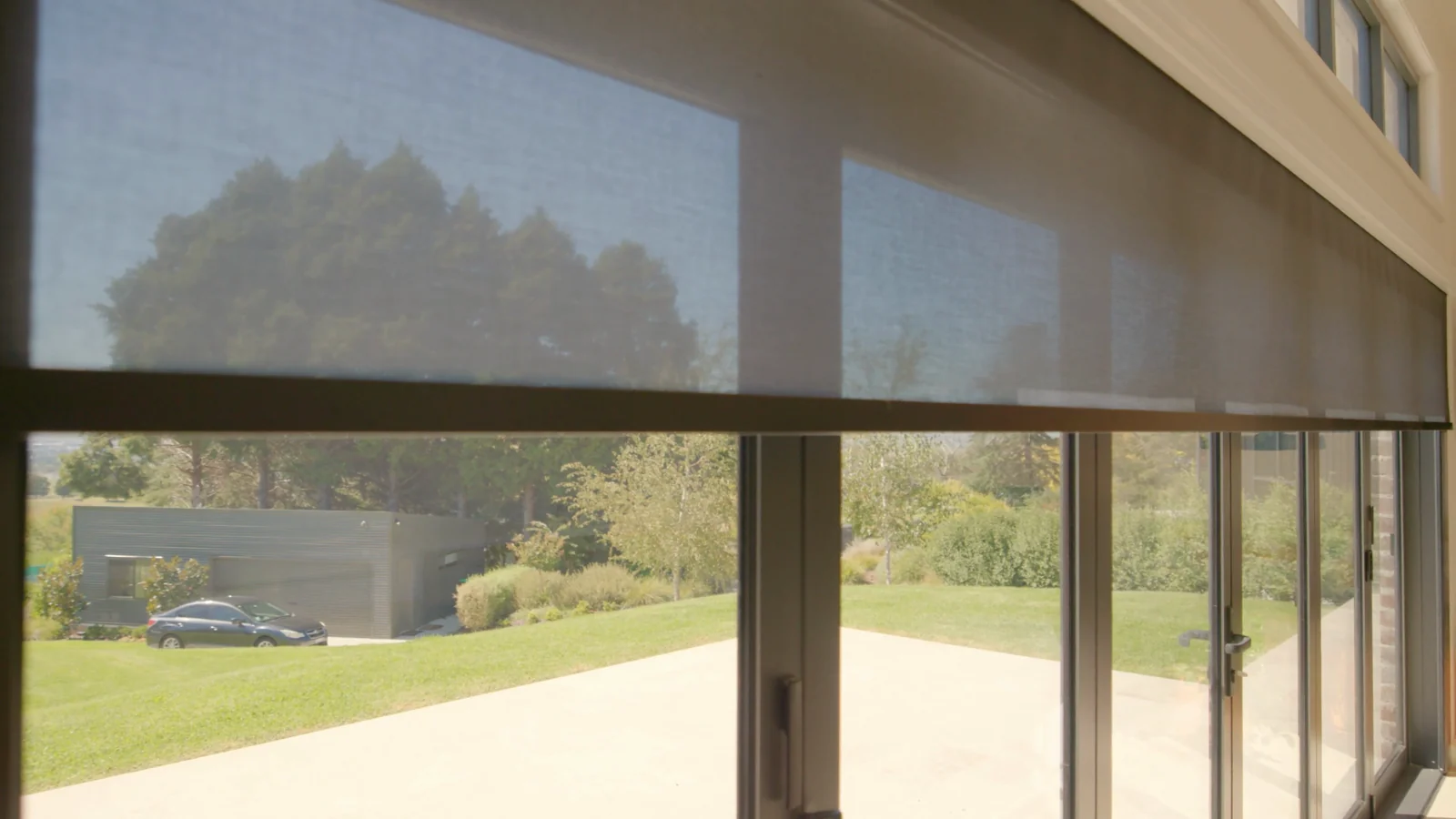
For glass like that, we usually suggest something else. On an acreage home at Mount Panorama, with long sliders looking out to the ranges, we went with sunscreen roller blinds that cut the glare and keep the view. If you're still weighing up blinds against curtains for a room, our guide to curtains or blinds, room by room is the place to start.
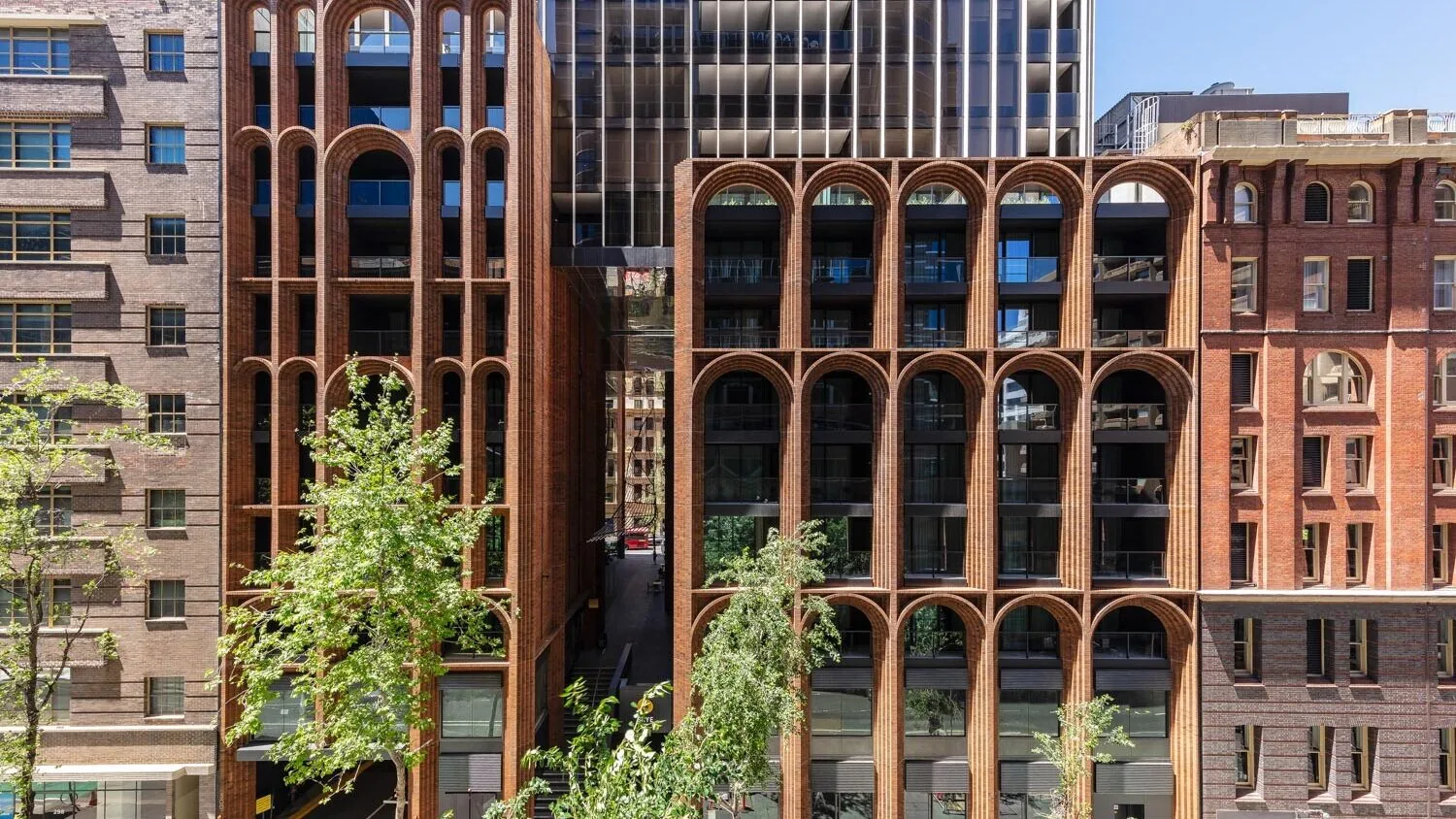
A venetian handles light and privacy, and a sheer softens the glass around it. In a Sydney CBD apartment tower, we supplied Vertilux 50 mm aluminium venetians alongside S-Wave sheer curtains across the apartments on levels 10 to 28. The sheers were hand-sewn in our Bathurst workroom. Behind that much curtain-wall glazing, the pair manages light, glare and privacy.
A feather duster or a damp cloth is all most venetians need. Aluminium and timber-look slats can take the damp cloth as often as a kitchen or bathroom needs. Keep timber away from soaking and solvent cleaners. Aluminium blinds with a fully enclosed base rail also stop dust building up in the bottom rail.
We come to you, at a time that suits, and bring the samples so you can see timber, timber-look and aluminium slats in your own light. We measure every window, talk through the room and where the sun hits it, and leave you with a written quote. Your venetians are custom-made to order and installed by our own team, and the person who measures your windows is the person who installs them. We test every blind before we leave and take the packaging with us. The work is backed by our 2-year warranty against faulty manufacture or installation.
We measure and install venetian blinds in Bathurst, across the Central West and in Sydney. Book a free measure and quote, or drop into our Bathurst showroom to see and handle the slats first.
We steer people to aluminium or a timber-look slat for bathrooms, laundries and kitchens. Real timber is happiest in dry rooms like living rooms, bedrooms and studies.
25 mm slats are finer and suit small windows and narrow reveals. 50 mm slats are broader, the classic venetian look, and they stack a little deeper when the blind is raised.
Going by Vertilux's data sheets, roughly 60 mm for a 25 mm aluminium system and 80 mm for a 50 mm system. If your reveal is shallower, we face fit the blind instead.
Closed, a venetian gives you privacy, but some light still gets in around the edges and through the cord holes. For a darker room, ask about a slat with the holes set to the back, or pair the venetian with a lined curtain.
Often, yes. Sloped-top, semi-circular and circular venetian shapes are made for special openings. We'll check yours at the measure and tell you straight if it won't work.
Custom-made and installed by our own team since 1977. Book a free in-home measure and quote.
Book a Free Measure & Quote