Guides
Choosing plantation shutters comes down to four calls: the material that suits the room, the louvre size that suits the window, how the panels open, and where the frame sits. We make those calls with you at a free measure, at your window, before anything is ordered.
Quicksew is a family business, and we've been fitting windows across the Central West since 1977. Our plantation shutters are custom-made to order for each opening and installed by our own team, from our Bathurst showroom to homes from Orange and Dubbo through to Sydney's Eastern Suburbs and Lower North Shore. This guide is how we talk people through it.
The room usually decides this one, not the colour chart.
In practice, that means an ensuite window that fogs up on a frosty Bathurst morning gets PVC, and a west-facing deck gets aluminium. In a Federation-era lounge, painted timber is usually where we start.
The louvres are the blades that tilt. Across the ranges we supply they come in 63, 76, 89 and 114 mm, and some timber ranges also come in 47 mm. A bigger louvre means fewer blades and a wider view when they're open. A smaller one sits better in a small window.
Louvre size also sets how deep your reveal needs to be for the shutter to sit inside it. On one range we install, an 89 mm louvre needs about 61 mm of clear depth with a front tilt rod, or 68 mm with a hidden one. A 114 mm louvre needs 74 to 81 mm. A deep reveal takes a big louvre with room to spare. A shallow one, or a winder handle in the way, usually points to a smaller louvre or a face-fit frame on the wall around the window.
This is the choice people think about least, and the one we spend the most time on in the room.
Tall shutters also need a divider rail across the panel. On timber we add one above about 1,800 mm, and on PVC above about 1,600 mm. It doubles as a split, letting the upper and lower louvres tilt independently. For the tilt itself, you can have a classic rod down the front of the panel or a hidden mechanism in the side of the panel for a cleaner look.
No, and we'd rather say so up front. Closed louvres cut glare and give you privacy, but a standard shutter isn't a blockout. Light comes in around the edges and where the louvres meet.
If a bedroom has to go properly dark, there are two ways we handle it. One polymer range we supply has a cordless honeycomb blind built into the shutter frame, which its maker rates as a full light block. Or we use shutters elsewhere in the house and put a blockout roller blind in that room.
A shutter is made to the exact opening, so the measure does a lot of the work. On site we:
None of that needs you to own a tape measure. It's part of the free measure and quote.
Most shutters take six to eight weeks from order. Cedar and shaped shutters take a little longer, and special aluminium colours longer again. We confirm your install date when you place the order, and our own team fits them.
Care is simple. Dust them with a soft brush or the brush on your vacuum, and use a barely damp cloth with a pH-neutral soap for marks. Keep harsh kitchen cleaners off them, and tilt the louvres through their full range now and then. Every shutter we install carries our 2-year warranty against faulty manufacture or installation.
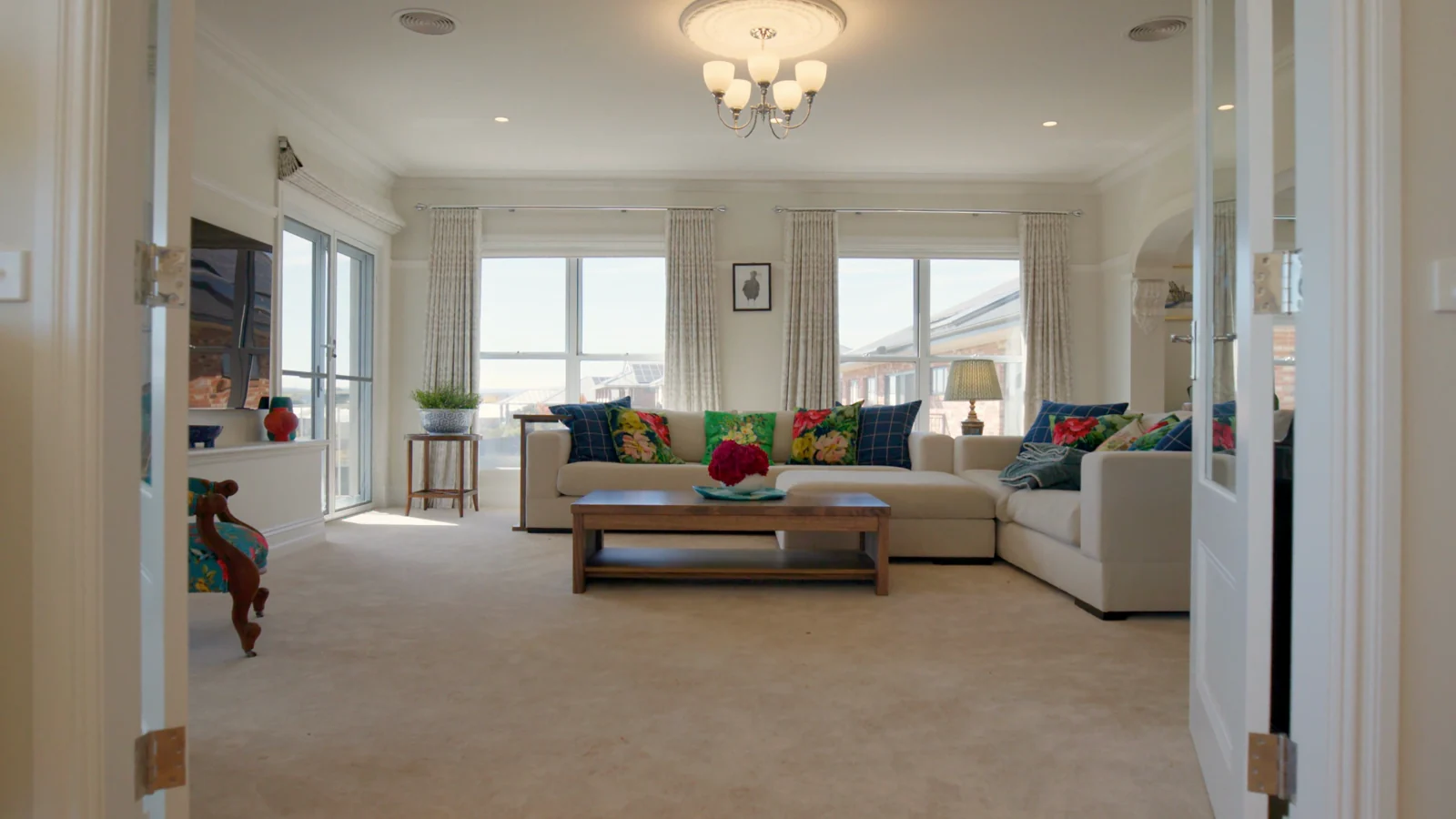
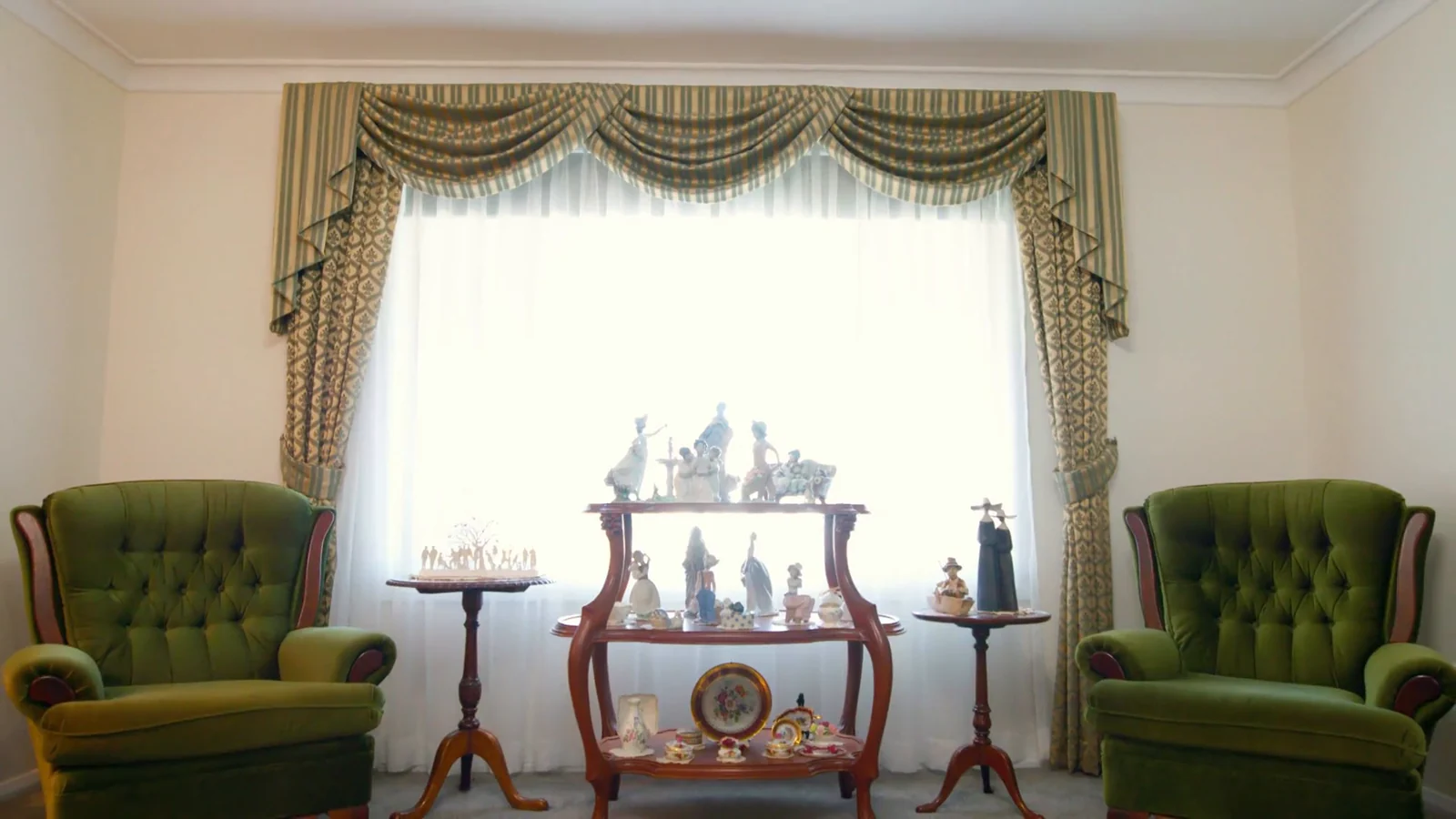
In one Bathurst family home, shutters went where a permanent, tidy finish suited better than fabric, with sunscreen roller blinds on the living windows and lined curtains in the formal rooms. In another Bathurst home, shutters handled light and privacy in the everyday rooms, while the formal rooms got swagged and tailed curtains hand-sewn in our Bathurst workroom.
Shutters don't have to go on every window, and part of our job is telling you where they earn their place and where a curtain or blind will do better. If you're still weighing it up, our guide to choosing curtains or blinds covers the rest of the house.
See the full range on our plantation shutters page, or book a free measure and quote. You're also welcome to drop into the showroom at 16 Bradwardine Road, Bathurst.
For a window where you want light and privacy control every day, no cords and a fitted look, usually yes. If what you need is a dark bedroom, a blockout blind or curtain does that better.
Yes, in PVC. It's waterproof and wipes clean. We don't put timber shutters in wet areas.
Yes. We take a template at the measure, and most shapes can be made in timber. Some aluminium shutters come in raked and other set shapes.
Timber and PVC shutters come in a range of standard paint colours, and both can be made in a custom Dulux, Resene or RAL colour.
Yes. We measure and install across the Central West, including Bathurst, Orange and Dubbo, and in Sydney's Eastern Suburbs and Lower North Shore.
Custom-made and installed by our own team since 1977. Book a free in-home measure and quote.
Book a Free Measure & Quote